- Google Play Music Desktop Player Not Working
- Google Play Music Desktop Player
- Google Play Music Desktop Player Gpmdp
First up is the imaginatively titled Google Play Music Desktop Player for Windows (hat tip to SlashGear).While it sticks to the basics, it does have one useful feature you can’t find on the web. Web version of Google Play Music doesn't seamlessly integrate with Google Drive to play music. If I sync to the computer, its fine. But I don't want 40GB of music synchronized to a work computer, it needs to play directly from the cloud. Either that, or the interface is not intuitive and I'm simply missing where to easily link the two (Play. Google Play Music™ Desktop Player. Windows: MacOS / Linux: Run 'Google Play Music' as a standalone desktop app. Never again will you have to hunt through your tabs to pause your music, or stop listening to your favourite song because Chrome is guzzling up all your RAM. Anyway, even if Google hasn’t, Samuel Attard has created a dedicated Google Play Music desktop player. It is available on all major desktop operating systems – Windows, Mac and Linux. It runs entirely on HTML5 so you don’t need to install adobe flash player or anything else. Download Google Play Music Desktop 3.0.0 (64-bit) for Windows for free, without any viruses, from Uptodown. Try the latest version of Google Play Music Desktop 2016 for Windows.
You might have heard about YouTube Music, Google’s latest effort at creating a music streaming service able to rival Spotify and Apple Music.
Anyone with a Google account can search for and listen to music on new service through their web browser, just like regular YouTube.
But there’s a flaw: Google don’t provide a YouTube Music app for the desktop, not on Windows, not on macOS and not on Linux — something that its bigger, badder, and far better-known competitors do.
Never fear: where Google shirks, open source steps up.
Google Play Music Desktop Player
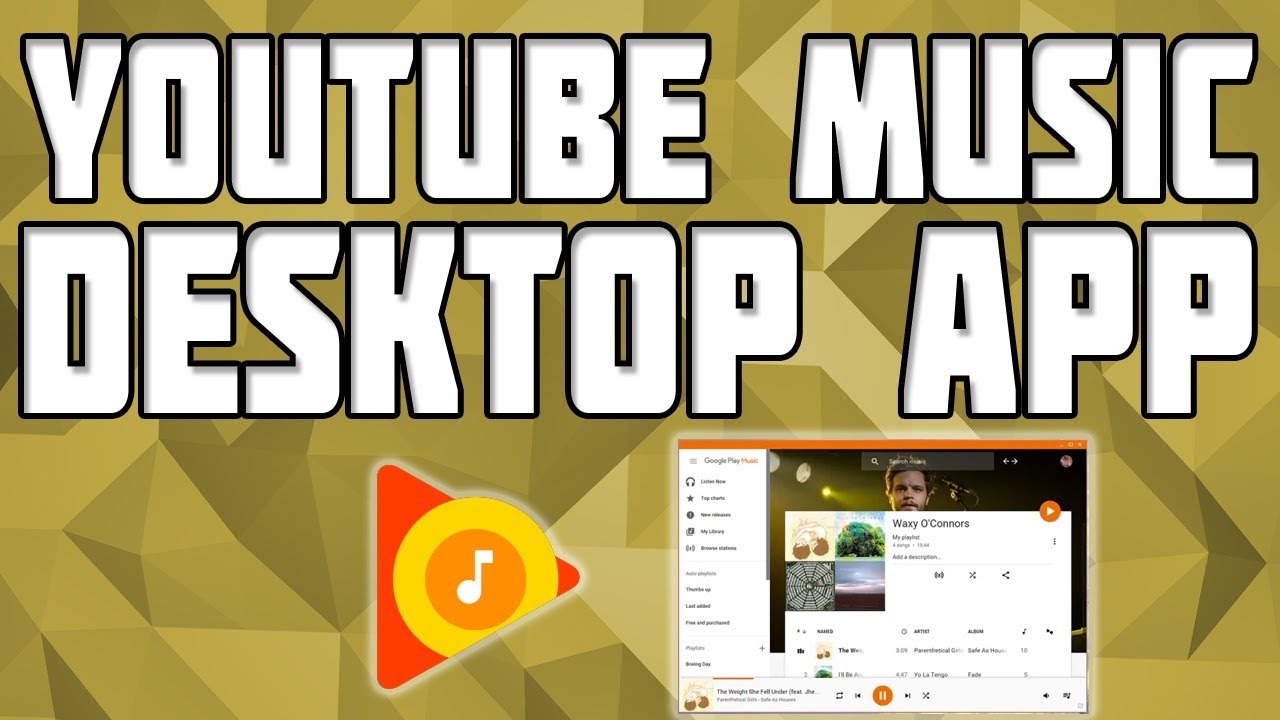
Google Play Music Desktop Player (herein referred to as ‘GPMDP’ because my fingers ache typing it out in full) is an unofficial desktop client for Google Play Music Virus for mac os. built using Electron (don’t groan).
The app is both open source and wildly popular. It has been downloaded over over 3 million downloads since launching a few years back.
GPMDP also boasts of being more “resource efficient” than running Google Play Music in a regular browser tab (though being an Electron app it’s not going to be super lightweight).
It’s fully customizable, supports last.fm scrobbling (always a win with me) and apparently features a built-in equalizer for fidelity fans to fine-tune (though I haven’t found it).
Naturally you do need a Google account to use the player (and have some tracks uploaded to your online library to use the Google Play Music side).
Other features include:
- Supports media keys (play, pause, stop, next, previous)
- last.fm scrobbling
- Desktop notifications on track change
- A simplistic mini player
- MPRIS integration
- Customizable Dark theme
- Smooth scrolling and overlay scrollbars for a nicer User Experience
- HTML5 Audio
- Minimize to task bar for background music playing
- Customizable shortcuts
- Choose your audio output device from within the player
And the latest version adds support for YouTube Music.
Google Play Music Desktop Player: YouTube Music Support
Google is busy promoting YouTube Music as its go-to audio offering and I get that, like regular YouTube, the “supposed” way to use it on the desktop is through my browser.
If you want to enjoy Google’s streaming service without being stuck inside a browser, you should check this app out
I honestly do get that.

But call me old — hey, I am — but I like to listen to music the old school way, i.e. in an application window I can manage using my OS, playback I control with my keyboard’s media keys or desktop sound applet, see media-rich track change notifications, and so on.
Which is why the developer of GPMDP is being really smart; he’s scratching an itch many are irritated by.
If you want to enjoy Google’s streaming service without being stuck inside a browser, you should certainly check it out.
Google Play Music Desktop Player, version 4.6.0 adds initial support for YouTube Music (though as explained in the release announcement, emphasis is very much on the ‘initial’ here).
By selecting the YouTube Music backend from the tray menu you, I and anyone else who wants to can listen to music on YouTube without being stuck inside a browser, and benefit from desktop integration, including notifications and sound menu support:
Although there are some limitations with the YouTube backend (like no theme support or mini-player) the integration works well enough.
The update also features a bump to the Electron framework, as well as various minor miscellaneous bug fixes.
Download Google Play Music Desktop Player
You can download the latest version of the unwieldy-named GPMDP direct from Github, where it’s available for Windows, macOS and Linux systems:
Google Play Music Desktop Player is also available to install from Flathub, the Flatpak app store — though, as of writing, the latest version has not been uploaded:
Summary
I use the app on Ubuntu 18.04 LTS and, I have to say, it works pretty well. Although I prefer Spotify this app was easy to install and launch, and easy to get set-up. After selecting the YouTube backend from the system tray area icon I was streaming my favourite artists on YouTube within seconds, and fully able to control media playback with my keyboard.
In all, the app is impressive (especially on the Play Music side). I look forward to support for advanced features, like customisation, being added to the YouTube backend.
Octane render for cinema 4d mac torrent.
Windows:
MacOS / Linux:
Run 'Google Play Music' as a standalone desktop app. Never again will you have to hunt through your tabs to pause your music, or stop listening to your favourite song because Chrome is guzzling up all your RAM. Now also has YouTube Music player fully integrated.
Developed by Samuel Attard.
No affiliation with Google. Google Play is a trademark of Google Inc.

Download
Acrobat for mac dc. Head over to our website http://www.googleplaymusicdesktopplayer.com to download the latest release for your platform.
OS Support
- Windows 7 or later
- Mac OS X 10.9.0 or later
- Ubuntu 14.04 or later
- Mint
- Fedora
- Debian
Features
- Supports media keys (play, pause, stop, next, previous)
- YouTube Music fully integrated!
- last.fm & ListenBrainz Scrobbling and Now Playing support!
- Discord Rich Presences Now Playing information
- Hands free Voice Controls!
- Desktop notifications on track change
- A simplistic mini player
- Dark Theme
- Customizable accent color + CSS support
- Task bar media controls (media controls embedded into the taskbar) Windows only
- Smooth scrolling and overlay scrollbars for a nicer User Experience
- HTML5 Audio Support - No more Adobe Flash Player
👍 - Minimize to task bar for background music playing
- Customizable hotkeys, no worries if you don't have media keys. Choose your own shortcuts
- Choose your audio output device from within the player
- Song Lyrics for those Karaoke nights
- And a whole lot more coming soon!
Integrating with GPMDP from External Applications

Google Play Music Desktop Player Not Working
There are two methods you can use to integrate with GPMDP from an external application.
Both are documented in the Docs folder. For one time read access you shouldprobably use the JSON interface. For an application that requires continuousupdates as to the state of GPMDP or needs to control GPMDP you should use theWeb Socket interface.
Issues
If you have any bugs / issues please check theFAQfirst before raising an issue
Credits
Logo designed by @JayToe
Development
To get started just pull the repo and run the following
To build the installers / release packages you need to run, you can only build a platforms installer from that platform.
All releases will be signing with my Code Signing Certificates (Authenticode on Windows and Codesign on OS X)
Google Play Music Desktop Player
Please see the development FAQ for additional requirements for building.
Contributing
If you find something wrong (theming issues, app crashes) please report them as an issue.
If you think you can add something cool or fix a problem, fork the repo and make a pull request :D
NOTE: Some of the functionality in this app has been extracted into smaller submodules. In particular
- Google Play Music Interaction - https://github.com/gmusic-utils/gmusic.js
- Theming - https://github.com/gmusic-utils/gmusic-theme.js
- Mini Player - https://github.com/GPMDP/gmusic-mini-player.js
- Electron Chromecast - https://github.com/GPMDP/electron-chromecast
Dev Requirements
- Node.js (Recommend
6.3.x) - NPM (3.x.x)
Continuous Integration
We run tests and generate signed installers on three CI platforms
Google Play Music Desktop Player Gpmdp
- Windows --> AppVeyor
- Linux & OS X --> Circle CI
You can download the latest signed installers for Windows from the artifacts section of AppVeyor
You can download the latest linux (debian and fedora) and OS X (darwin) builds from the artifacts section on Circle CI
License
The MIT License (MIT)
Copyright (c) 2016 Samuel Attard
Permission is hereby granted, free of charge, to any person obtaining a copy ofthis software and associated documentation files (the 'Software'), to deal inthe Software without restriction, including without limitation the rights touse, copy, modify, merge, publish, distribute, sublicense, and/or sell copies ofthe Software, and to permit persons to whom the Software is furnished to do so,subject to the following conditions:
The above copyright notice and this permission notice shall be included in allcopies or substantial portions of the Software.
THE SOFTWARE IS PROVIDED 'AS IS', WITHOUT WARRANTY OF ANY KIND, EXPRESS ORIMPLIED, INCLUDING BUT NOT LIMITED TO THE WARRANTIES OF MERCHANTABILITY, FITNESSFOR A PARTICULAR PURPOSE AND NONINFRINGEMENT. IN NO EVENT SHALL THE AUTHORS ORCOPYRIGHT HOLDERS BE LIABLE FOR ANY CLAIM, DAMAGES OR OTHER LIABILITY, WHETHERIN AN ACTION OF CONTRACT, TORT OR OTHERWISE, ARISING FROM, OUT OF OR INCONNECTION WITH THE SOFTWARE OR THE USE OR OTHER DEALINGS IN THE SOFTWARE.